
Average construction times for residential buildings in Australia have reached 28.6 months according to the Australian Bureau of Statistics (ABS), accelerating federal and state backing for modular and off-site methods to meet the national target of 1.2 million homes.
Off-site manufacturing shifts project bottlenecks to the final assembly stage, requiring high-precision lifting maneuvers and immediate response in urban or remote environments without lengthy mobilization or assembly times.
Sarens reinforces its Taxi Rental service from its strategic hubs in Perth and Brisbane, deploying road-certified Franna cranes and all-terrain units of up to 350 tons ready to operate rapidly.
Australia’s construction sector is undergoing a structural transformation toward prefabricated and modular systems as governments and developers accelerate the pace to meet the National Housing Accord target of building 1.2 million new homes before 2030. According to data from the Australian Building Codes Board (ABCB), the national prefabrication industry has already reached an estimated value of 16.8 billion Australian dollars, supported by a federal commitment of AUD 54 million for regulatory reform and state-level deployment, alongside major regional initiatives such as Western Australia’s AUD 97 million investment package to expand local off-site manufacturing capacity.
In response to this growing demand for rapid on-site assembly, Sarens, world leader in heavy lifting, engineered transport and crane rental services, is reinforcing its Taxi Rental division in Australia to help contractors eliminate bottlenecks during the installation phase. The latest figures from the Australian Bureau of Statistics (ABS) reveal that average execution times from commencement to completion for apartment blocks across the major eastern states reached 9.54 quarters (approximately 28.6 months) in fiscal year 2026, while townhouses or modular homes averaged just 11.2 months. By shifting structural manufacturing into controlled industrial environments, popular methods can reduce delivery times by 40% to 50%, turning final on-site assembly into a high-precision logistics operation with very tight schedules.
However, moving and installing housing modules, precast concrete panels, or roof trusses on urban sites with limited space or in remote regional developments poses a specific operational challenge. Contractors need immediate and flexible lifting capacity, able to operate within narrow road-closure windows and on constrained sites, without taking on the high mobilization costs or multi-day assembly delays associated with large crawler cranes or tower cranes.
Operating from its strategic bases in Perth (Western Australia) and Brisbane (Queensland), Sarens addresses this need through rapid-dispatch mobile crane solutions designed for short-duration, high-frequency lifts in residential, commercial, and civil infrastructure projects.
To meet these requirements nationwide, Sarens has a national fleet of 30 cranes covering 20- and 25-ton road-certified Franna pick-and-carry models, as well as all-terrain units with capacities of up to 350 tons, Rough Terrain cranes, and crawler models, all backed by the mobilization capacity of its global inventory of more than 1,500 cranes. Because Franna cranes travel directly on the road network at highway speeds and require no on-site assembly or setup time, they can arrive on location, execute multiple structural lifts within hours, and clear the area immediately, eliminating downtime and maximizing contractor productivity.
According to Willem Jobse, Regional Director Sarens Oceania, “as Australia embraces modular and prefabricated construction to deliver housing and social infrastructure faster, the critical path of projects shifts from months of traditional on-site framing to just a few hours of precision lifting. Builders cannot afford to wait days to assemble a crane or block congested urban streets. Through our Taxi Rental service, which combines agile, road-ready cranes with high-capacity all-terrain units and highly experienced operators, we offer contractors the immediate response they need to keep their off-site construction schedules on track.”
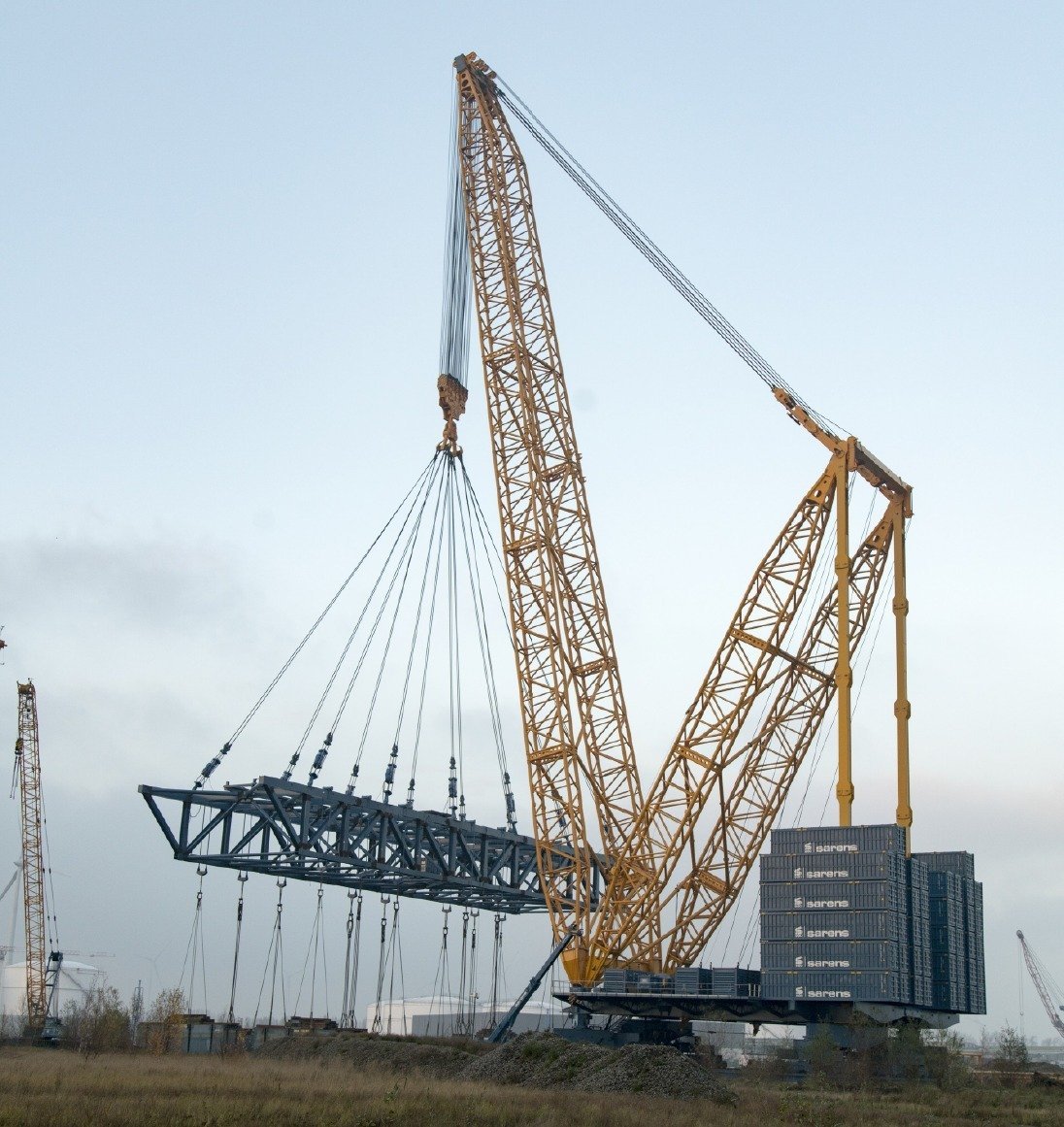
Sarens has a solid track record supporting the civil, industrial, and building sectors in Australia, having participated in landmark projects such as the West Gate Tunnel Project in Melbourne, the Sydney Gateway Bridge, the Tonkin Highway upgrades and the METRONET project in Perth, as well as the installation of a 3,000-ton bridge section for the Darlington Freeway in Adelaide. Backed by its international network, the company continues to adapt its local operations to support both major infrastructure milestones and agile, everyday lifting requirements across Oceania.
About Sarens
Sarens is the global leader and reference in crane rental, heavy lift and engineered transportation services. With state-of-the-art equipment, value engineering, one of the world's largest inventories of cranes, transporters and special rigging equipment, Sarens offers creative and intelligent solutions to today's heavy lifting and engineering transport challenges.
With more than 100 entities in 70 countries operating without borders, Sarens is an ideal partner for small to large-scale projects. Sarens currently employs 6,500 highly qualified professionals who are ready to serve the needs of any client worldwide and in all market sectors. https://www.sarens.com/