
Texas grid operator ERCOT is expected to publish the results of its audit of around 300 data centers on December 10. Until then, state environmental permitting remains on hold.
Demand for capacity continues to grow, with Goldman Sachs estimating that U.S. data center power consumption will rise from 31 GW to 66 GW between 2025 and 2027. Sarens is positioning itself as a strategic partner, ready to deliver speed and precision when the sector resumes.
With labor shortages already delaying projects and delays costing up to $14.2 million per month for a 60 MW data center, early logistics planning is becoming critical.
Texas is experiencing an unprecedented increase in power demand. The ERCOT (Electric Reliability Council of Texas) power grid reached a record peak demand of 91.1 GW in summer 2026, 6% above the previous record, according to the U.S. Energy Information Administration (EIA). This is compounded by interconnection requests totaling around 474 GW, more than five times the record peak, with approximately 90% of these requests related to data centers, according to the Office of the Governor of Texas. Within this context, authorities have launched a comprehensive review process. In August , the Governor directed the Public Utility Commission of Texas (PUCT) and ERCOT to audit all data centers progressing toward grid connection, covering around 300 projects. ERCOT has also suspended approvals to energize data centers of 75 MW or more and has set December 10 as the date for the publication of its reports.
For the industry, this pause creates a valuable planning window. Goldman Sachs notes that it takes 18 to 24 months to build a data center once permits have been secured, while only 50% to 60% of planned capacity is delivered on schedule. Supply chain constraints and labor shortages are among the most common causes of delays. In this context, construction agility is becoming increasingly critical. A one-month delay at a typical 60 MW U.S. data center is estimated to cost up to $14.2 million in lost revenue, additional costs and penalties, according to STL Partners data. Against this backdrop, Sarens, which has operated in the U.S. since 2009 and is headquartered in Houston, with offices also in Odessa and Beaumont, positions as a logistics partner for developers and contractors preparing for the execution phase.
Lift studies, transportation route planning and equipment reservations can all be carried out before restrictions are lifted, meaning that companies entering the restart phase with their projects already advanced will have a clear advantage in the race to execution. The pause, however, does not change the underlying demand. ERCOT has identified 17 large facilities, including data centers, with a combined peak demand of 6,608 MW expected over the next five years. These projects have completed all required procedures except for final energization approval.
At the national level, Goldman Sachs Research expects installed U.S. data center capacity to exceed 95 GW by the end of 2027, with Texas among the markets expected to see the largest volume of new capacity additions. Despite the resulting pressure on the state’s grid, the impact could remain relatively limited thanks to new power generation currently in the development pipeline. Meanwhile, the Electric Power Research Institute (EPRI) projects that data centers will account for between 9% and 17% of U.S. electricity demand by 2030.
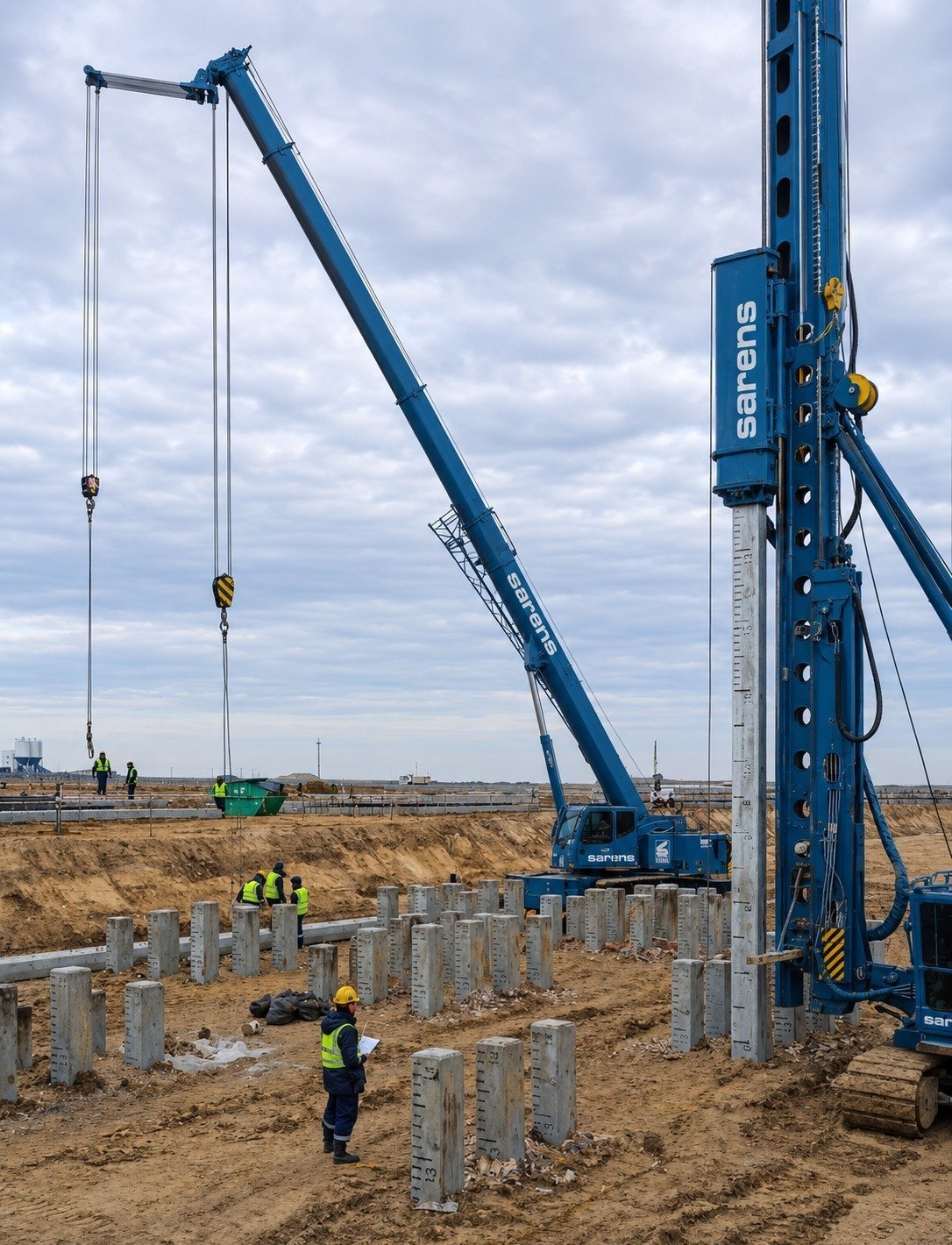
Once the pause is lifted, and throughout the preceding planning stages, Sarens is positioned as a key strategic partner for the efficient execution of data center projects in Texas. The company supports every stage of construction, from initial planning through transportation, lifting and installation.
In addition to its fleet of cranes, Sarens offers self-propelled modular transporters (SPMTs) and extensive experience in industrial and wind energy projects. For data center projects, the company also provides fully automated robotic skates for loads of up to 50 tonnes, enabling critical equipment to be positioned in confined spaces without impacting the interior architecture.
According to Victor Martinez, Country Manager for Sarens USA, “The regulatory pause will not materially affect demand for digital capacity. What it will change is the pace at which these projects need to be executed. Companies that plan the transportation and lifting of critical equipment today will be better positioned to meet their deadlines when construction resumes and bring their operations online sooner.”
Globally, Sarens has consolidated its position as a key strategic partner in the expansion of digital infrastructure, thanks to its ability to execute both heavy outdoor logistics and high-precision indoor installation in highly complex environments across mature markets in Europe and North America.
About Sarens
Sarens is the global leader and reference in crane rental, heavy lift and engineered transportation services. With state-of-the-art equipment, value engineering, one of the world's largest inventories of cranes, transporters and special rigging equipment, Sarens offers creative and intelligent solutions to today's heavy lifting and engineering transport challenges.
With more than 100 entities in 65 countries operating without borders, Sarens is an ideal partner for small to large-scale projects. Sarens currently employs 5,000 highly qualified professionals who are ready to serve the needs of any client worldwide and in all market sectors. https://www.sarens.com/