
Operating under a combined cycle system, the plant maximizes the use of natural gas. By reusing waste heat, it can achieve efficiencies of over 60%, which means it generates more energy with less gas and emits less CO2 per megawatt generated compared to coal or diesel plants.
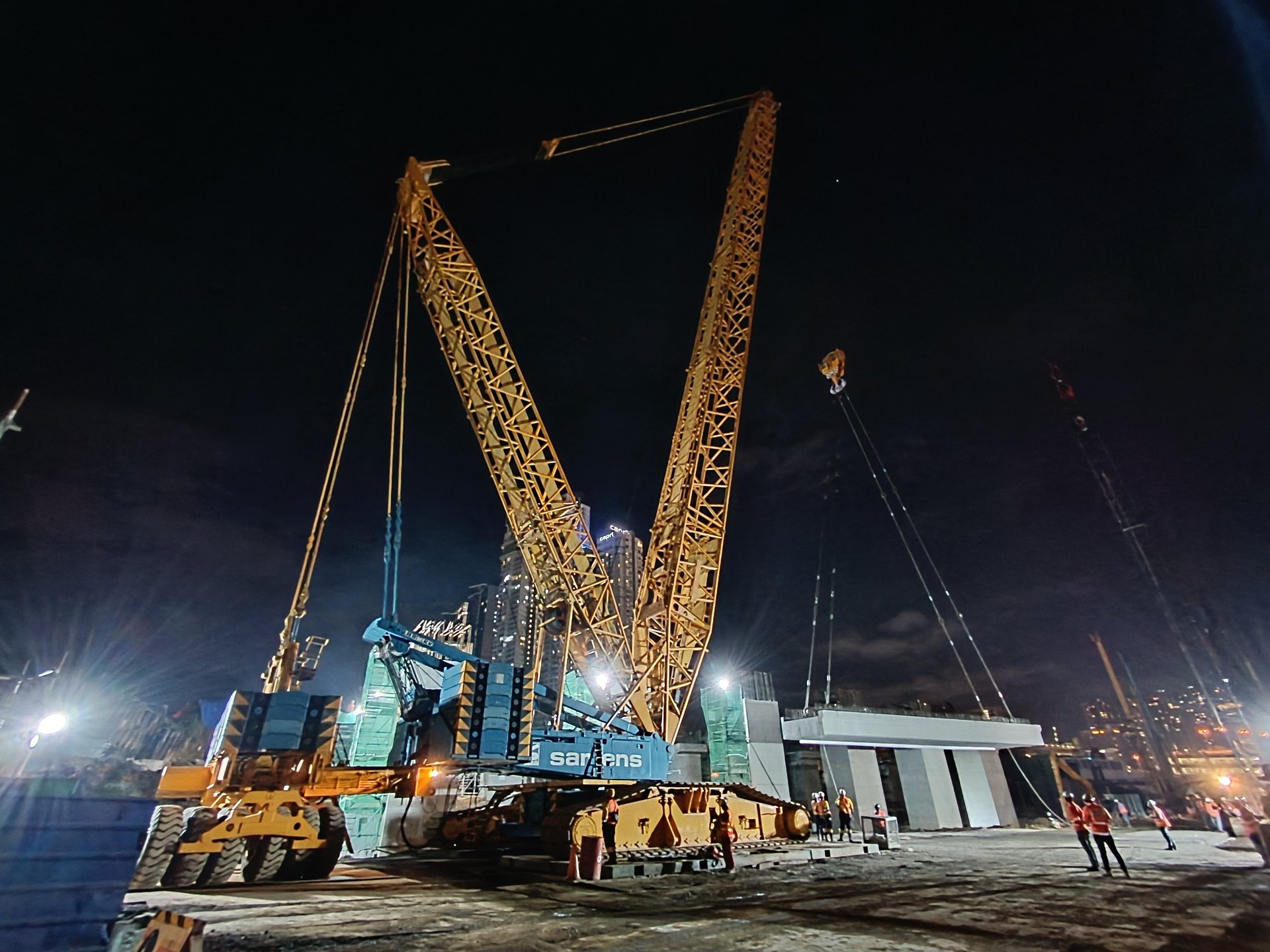
Sarens selected the SCC2000 and QUY70 crawler cranes for the works in the plant because of their stability, as the project required stable ground and vibration control.
Despite adverse weather conditions, with frequent rain further affecting ground stability, and other factors such as reduced operating, the lifting operations were carried out within the agreed timeline.
The Miri Combined Cycle Gas Turbine (CCGT) power plant, located in Sarawak, Malaysia, will have a capacity of 500MW once operational in 2027 and will provide efficient and stable energy to the region. This project, developed by PETROS Power, a subsidiary of the Sarawak state oil and gas company, will act as a reliable base load power source complementing renewable energy sources, ensuring that electricity is always available for households and industry.
Sarens, world leader in heavy lifting, engineered transport, and crane rental services, is collaborating on the construction of this plant on behalf of its client Intercargo Machinery. As part of its scope, the company had to lift and handle a 12-ton vibratory hammer used to install or extract piles from the ground. To carry out this project, Sarens' heavy lifting engineering team conducted a site survey that took into account the layout of the piles, the lifting radius, and the necessary safety requirements. Following this study, the SCC2000 and QUY70 crawler cranes were selected for their stability when using mats, as the project required stable ground and vibration control. Their lifting capacity and mobility were also taken into consideration.
It took only two days to transport the machinery from the Sarens Malaysia yard to the site, making use of lowbed trailers for the crane components, counterweights, and rigging gear. Assembly of the cranes required one day for the SCC2000 and half a day for the QUY70, with the main challenges being limited working space and soft ground conditions, which made it necessary to use mats to provide extra stability for the machinery's movements. In addition, the manufacturer provided technical guidance on crane configuration and safety checks for the job, offering remote assistance or site visits if necessary.
Once all the equipment was assembled, Sarens carried out the manipulation of the vibratory hammer and the pile sections. For this operation, the SCC2000 was configured with a standard boom. The hammer weighed 12 tons and had a working radius of approximately 8 to 12 meters. The lift was carried out with controlled and constant movements to maintain the alignment of the hammer, taking into account the soft ground conditions and maintaining maximum stability of the crane during the lift.
A crane operator, a signalman, two assemblers, and a site supervisor were involved in this operation. Despite adverse weather conditions, with frequent rain further affecting ground stability, and other factors such as reduced operating areas near ongoing activities, which affected logistics and crane positioning, the lifting operations were carried out within the agreed timeline, and the cranes were on-site for the duration of the piling works.
Sarens' efforts represent a new milestone in the construction of the plant, which will not only provide a stable source of electrical energy, but will do so in a more environmentally efficient manner. Operating under a combined cycle system, the plant maximizes the use of natural gas. First, it uses gas combustion to drive a turbine and then captures the heat that would normally be lost through the exhaust to generate steam and drive a second turbine. By reusing this waste heat, it can achieve efficiencies of over 60%, which means it generates more energy with less gas and emits less CO2 per megawatt generated compared to coal or diesel plants.
The Miri Combined Cycle Gas Turbine Power Plant will also boost the region's industry, as it is a constant source of energy that can supply new factories and processing plants, or data centers, which require uninterrupted electricity flows for their operation. Sarawak's electricity system has traditionally relied on large hydroelectric dams located in the center of the state. However, transmitting that energy to the region resulted in transmission losses that are now being offset by the new plant.
Sarens has more than 60 years of international experience in the development and installation of strategically important projects. The company has been recently involved in the Clean Fuel Project works in Thailand, in the expansion of the S-Oil plant in Ulsan, South Korea, in the construction of the Petroperu refinery in Talara (Peru), and in the Skikda refinery in Algeria among others. Sarens was also recently commissioned by PTSC M&C for the load out of an LQUP jacket weighing more than 4,500 tons in Vietnam that will be dedicated to the extraction of oil and gas in the Bay of Bengal.
About Sarens
Sarens is the global leader and reference in crane rental, heavy lift and engineered transportation services. With state-of-the-art equipment, value engineering, one of the world's largest inventories of cranes, transporters and special rigging equipment, Sarens offers creative and intelligent solutions to today's heavy lifting and engineering transport challenges.
With more than 100 entities in 65 countries operating without borders, Sarens is an ideal partner for small to large-scale projects. Sarens currently employs 5,000 highly qualified professionals who are ready to serve the needs of any client worldwide and in all market sectors. https://www.sarens.com/